|
<< Click to Display Table of Contents >> Symbol versions |
  
|
|
<< Click to Display Table of Contents >> Symbol versions |
|
Symbol versions are different variants of the same symbol, for example a vertical and a horizontal version of the same symbol. There might be 1, 2, 4 or 8 versions of the same basic symbol, depending on how symmetric the symbol is, and if it is affected by rotation or not.
According to the IEC standard, these versions are named with the first 8 letters of the alphabet (A, B, C, D, E, F, G, and H).
A symbol that is symmetric in both the vertical and the horizontal plane, and which is not affected by rotation, like a circle, covers all versions. The version of such a symbol is therefore defined as ABCDEFGH. Please refer to the figure below.
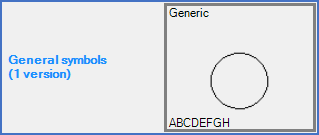
Figure 1060: General symbols
Symmetric symbols without a direction, but which are affected by rotation, like a resistor, may exist in two versions, like the resistor in the figure below. The vertical version is then defined as ACEG, and the horizontal BDFH.
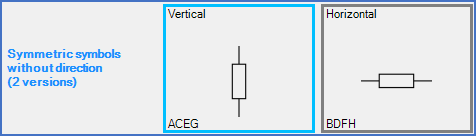
Figure 1061: Symmetric symbols without direction
Symbols which on top of that can also change direction, like the diode in the figure below, may have four versions. Those versions are called AE, BF, CG and DH.
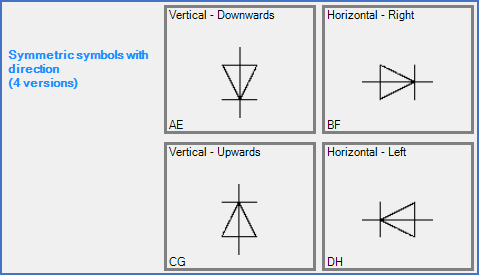
Figure 1062: Symmetric symbols with direction
The most complex case is a symbol that is affected by rotation, that has a direction, and which can also be mirrored. A good example of that is the change-over contact shown in the figure below. For a symbol like that, we may have up to eight versions, which are then called A, B, C, D, E, F, G, and H.
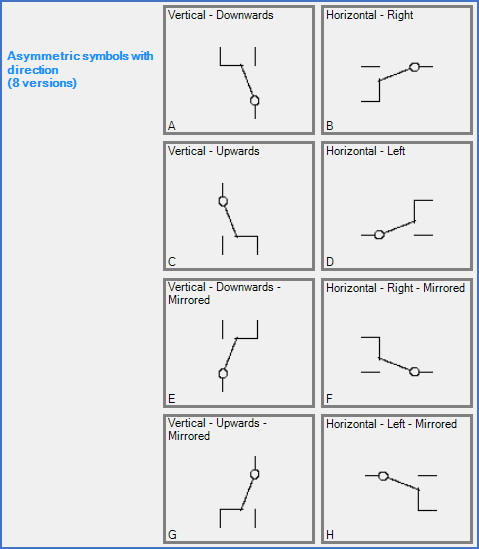
Figure 1063: Asymmetric symbols with direction